
BY SANDHYA DISSANAYAKE, ATTORNEY-AT-LAW
Sri Lankan spin great Muttiah Muralitharan has raised concerns over the evolving art of spin bowling in modern franchise cricket, stating that contemporary spinners in the Indian Premier League are no longer focused on turning the ball, but rather on containment through variations.
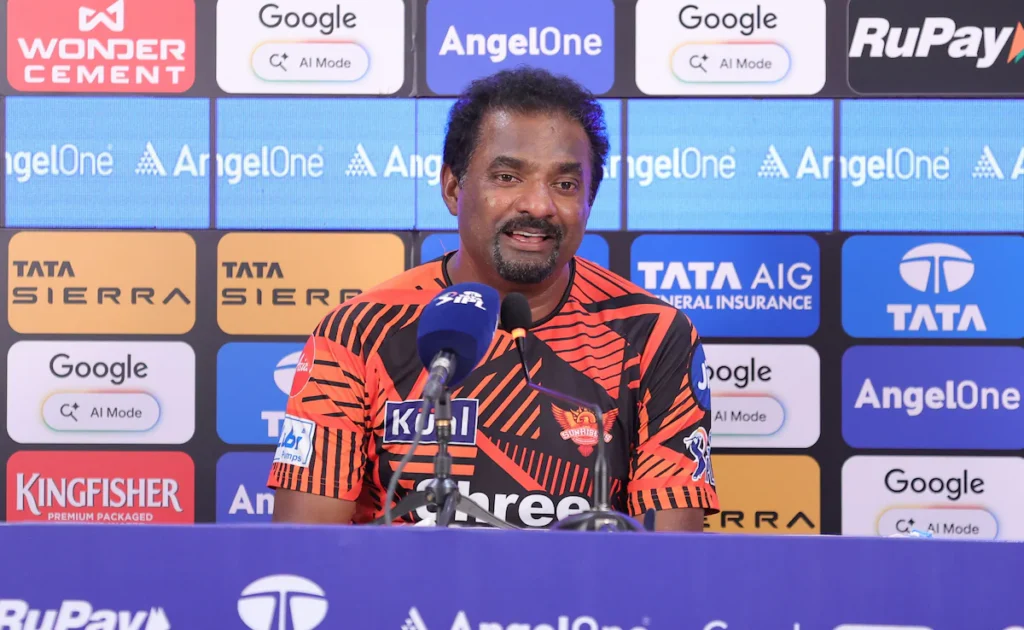
Speaking to reporters following Sunrisers Hyderabad’s victory over Mumbai Indians, Muralitharan observed that the traditional philosophy of spin bowling has significantly changed, with younger players increasingly prioritising limited-overs skills over classical spin development.
According to the legendary off-spinner, modern domestic structures have also contributed to this shift. He explained that in earlier generations, spin bowlers were trained with a primary objective—to turn the ball and challenge batters with deviation. However, he believes that today’s emerging spinners are more focused on variation, pace changes, and containment strategies rather than extracting natural spin.
“When we played cricket, as a spinner, you had to turn the ball—that was the first objective. Nowadays, it is not the key because everyone is focused on limited-overs cricket,” Muralitharan said.
He further emphasized that foundational development is being compromised, noting that young bowlers often do not spend enough time mastering spin during their formative years. Instead, he said, they begin experimenting with faster deliveries and variations early in their careers, which limits their ability to develop strong spin fundamentals later.
“Even at a young age, they try to bowl quicker and vary the deliveries instead of spinning it. When you reach 18 or 19, it is difficult to change because the muscle memory is already set,” he added.
Muralitharan also compared modern batting approaches in the IPL to practice sessions against throwdown specialists, suggesting that batters often face little natural challenge unless bowlers are able to produce significant spin.
“If you cannot spin the ball, it is like throwdown practice for batters. They just get into position and hit,” he explained. “But if you spin it, their eyes open because they start thinking and adjusting.”
The Sri Lankan great also reflected on how he and Australian legend Shane Warne would have fared in today’s high-scoring T20 environment. While acknowledging their ability to generate spin, he admitted that even top-class bowlers would have faced challenges on batting-friendly pitches.
“We would have still turned the ball, maybe taken one or two wickets, but runs would still come easily because pitches are very good for batting,” he said, adding that comparing eras is no longer meaningful due to the evolution of batting power and mindset.
Muralitharan also pointed out that the modern T20 format is heavily driven by entertainment value and commercial interests, which naturally favour high scoring games. He noted that rules such as impact players and batting-friendly conditions are designed to enhance spectator engagement rather than prioritise traditional balance.
“If we prepare fair wickets, the balance will improve, but spectators want entertainment—fours and sixes,” he said. “Cricket is now a big business, and the focus is on entertainment.”
Despite his concerns, Muralitharan believes spinners will eventually adapt, though he suggested it may take time for bowlers to rediscover the art of turning the ball effectively in the shortest format.