
By Niru Aravindhan
FFSL President appointed SAFF Senior Vice President and South Asian Football Competition Committee Chair amid renewed ambitions to revive Sri Lankan football.
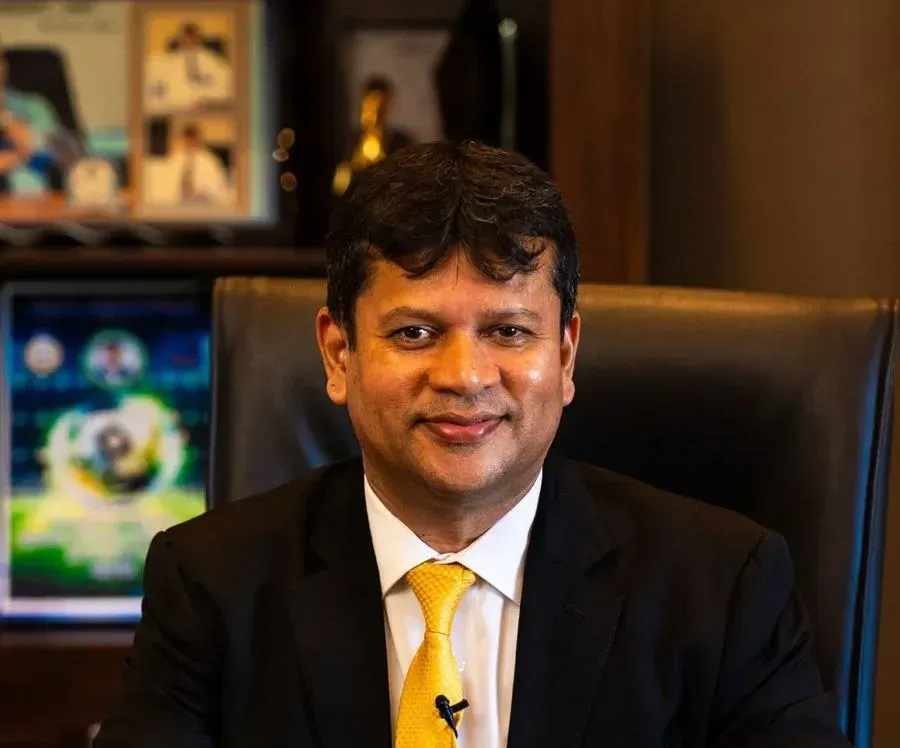
Football Federation of Sri Lanka (FFSL) President Jaswar Umar has secured two additional leadership positions within South Asian football, strengthening his influence in the region and expanding his responsibilities in the international game.
Umar has been appointed Senior Vice President of the South Asian Football Federation (SAFF) and Chair of the South Asian Football Competition Committee, according to the FFSL.
The appointments add to his existing international roles as a member of the FIFA Grassroots and Amateur Football Committee and the Asian Football Confederation (AFC) Development Committee.
His expanded portfolio places him in a stronger position to contribute to regional football administration, competition planning and development initiatives, while also representing Sri Lanka’s interests within the wider South Asian football community.
Focus on Reviving Sri Lankan Football
Under Umar’s leadership, the FFSL has pursued a programme aimed at improving the competitiveness of the national team, expanding international exposure and strengthening football development across the country.
Key initiatives have included the appointment of internationally qualified professional coach Abdullah Almutairi, efforts to attract investment and the expansion of grassroots and other football development projects.
The federation has also highlighted Sri Lanka’s progress in the FIFA Men’s World Rankings, stating that the national team climbed 21 places from 207th to 186th during Umar’s tenure.
While the ranking improvement represents progress, sustaining that momentum through consistent performances against regional opponents remains a major challenge for Sri Lankan football.
SAFF Championship Ambition Remains the Ultimate Target
Umar has outlined an ambitious vision for Sri Lankan football, with a particular emphasis on restoring the country’s competitiveness at the South Asian level and eventually reclaiming the SAFF Championship title.
Sri Lanka last won the regional championship in 1995, leaving the national team with a long-standing challenge to return to the summit of South Asian football.
Umar’s new SAFF responsibilities could provide additional opportunities to contribute to the development of regional competitions and strengthen cooperation among member associations.
However, the ultimate measure of progress at home will be whether administrative initiatives, international appointments and development programmes translate into improved national-team performances and sustained success on the field.
With his responsibilities now extending further into the regional football structure, Umar faces the dual challenge of contributing to South Asia’s football development while helping Sri Lanka rebuild its standing in the sport.
For Sri Lankan football, the hope will be that his growing international influence can be converted into tangible benefits for the national team, domestic competitions and the next generation of players.