
BY SANDHYA DISSANAYAKE, ATTORNEY-AT-LAW
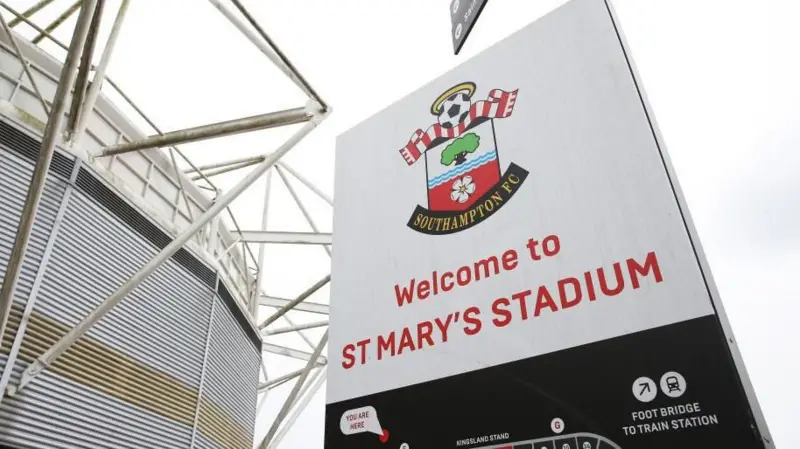
Southampton FC have formally launched an appeal after being sensationally removed from the Championship play-offs by an independent disciplinary commission, following findings of regulatory breaches related to alleged spying.
The ruling, issued on Tuesday evening, not only expelled Southampton from the promotion play-offs but also reinstated Middlesbrough FC into the competition, where they are now set to face Hull City AFC in the final on Saturday.
In addition to their removal from the play-off race, Southampton were handed a four-point deduction for the following Championship season after admitting breaches of two English Football League (EFL) regulations.
Club Calls Sanction “Manifestly Disproportionate”
Southampton chief executive Phil Parsons issued a strongly worded response, apologising to rival clubs and supporters while condemning the severity of the punishment.
“Southampton has been denied the opportunity to compete in a game worth more than £200m and one which means so much to our staff, players and supporters,” Parsons said. “We believe the financial consequence of yesterday’s ruling makes it, by a very considerable distance, the largest penalty ever imposed on an English football club.”
While acknowledging wrongdoing, Parsons insisted the club could not accept what they view as an excessive punishment.
“What happened was wrong,” he added. “But we cannot accept a sanction which bears no proportion to the offence.”
Legal Challenge to Precedent and Proportionality
Southampton’s appeal, which is due to be heard by an independent league arbitration panel, will argue that the sanction is inconsistent with historical precedents in English football.
The club referenced a £200,000 fine imposed on Leeds United in 2019 following a similar spying incident involving Derby County FC. However, Southampton argue that the regulatory framework has since changed significantly, including the introduction of Rule 127, which explicitly prohibits observing opponents within 72 hours of a match — a rule introduced in response to the Leeds incident.
Southampton’s statement also cited other high-profile disciplinary cases, including points deductions for Luton Town FC and Derby County FC, as well as recent financial penalties involving Everton FC and regulatory scrutiny faced by Chelsea FC.
“Denied a Massive Sporting Opportunity”
A key argument in Southampton’s appeal centres on the scale of the financial and sporting consequences. The club stressed that being excluded from a play-off campaign effectively denies them participation in a match worth an estimated £200 million, describing it as unprecedented in English football sanctions.
Parsons further argued that proportionality is a fundamental principle of sporting justice and suggested that the ruling deviates significantly from established disciplinary standards.
“We say this not to minimise what occurred at this club,” he said, “but because proportionality is itself a principle of natural justice.”
Arbitration Hearing to Decide Outcome
The case will now move to an independent arbitration panel, which will determine whether Southampton’s appeal is upheld or whether the original ruling stands.
The outcome is expected to have major implications not only for Southampton’s immediate future, but also for how regulatory breaches are punished in English football moving forward — particularly in cases involving competitive integrity and pre-match surveillance.
For now, the Championship promotion race has been thrown into further uncertainty, with clubs and supporters awaiting what could become one of the most consequential legal decisions in recent English football history.